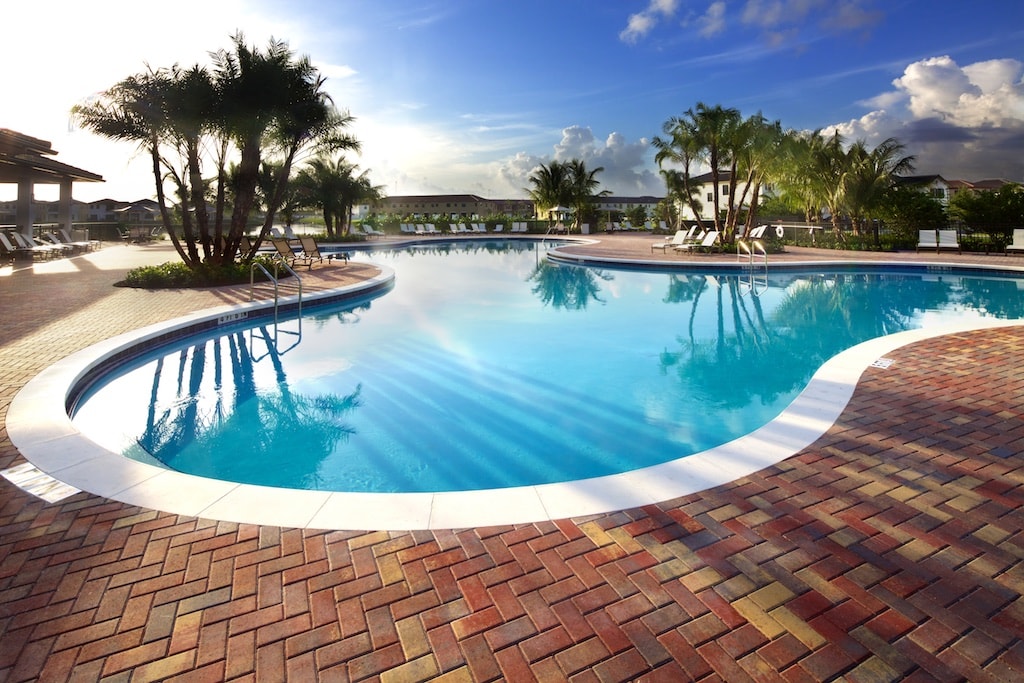
What Property Managers, Associations and Builders Should Know About Commercial Pavers
Commercial hardscape asks more of pavers than a backyard patio ever will. A condominium pool deck may see hundreds of residents and guests a week; a shopping center entry takes delivery trucks every morning; a streetscape has to handle cars, pedestrians and city utility work for decades. Whether you manage a building, sit on an association board or are developing a new community, planning commercial pavers in South Florida comes down to a handful of decisions that are worth getting right the first time.
Why Pavers Work So Well for Commercial Properties
The biggest advantage of interlocking pavers on a commercial property is how easily they can be repaired. When a section settles, a tree root lifts an area, or a utility line has to be reached, the affected pavers can be lifted, the base corrected, and the same pavers re-laid. There is no saw-cut patch left behind like there is with poured concrete or asphalt — which matters a great deal on a property where appearance affects rents, sales and resident satisfaction.
Pavers are also strong and stable. Concrete pavers have a minimum compressive strength of 8,000 psi by industry definition, and because the joints let the pavement flex, the surface doesn’t crack under movement the way a rigid slab can.
Design for the Traffic the Area Will Really See
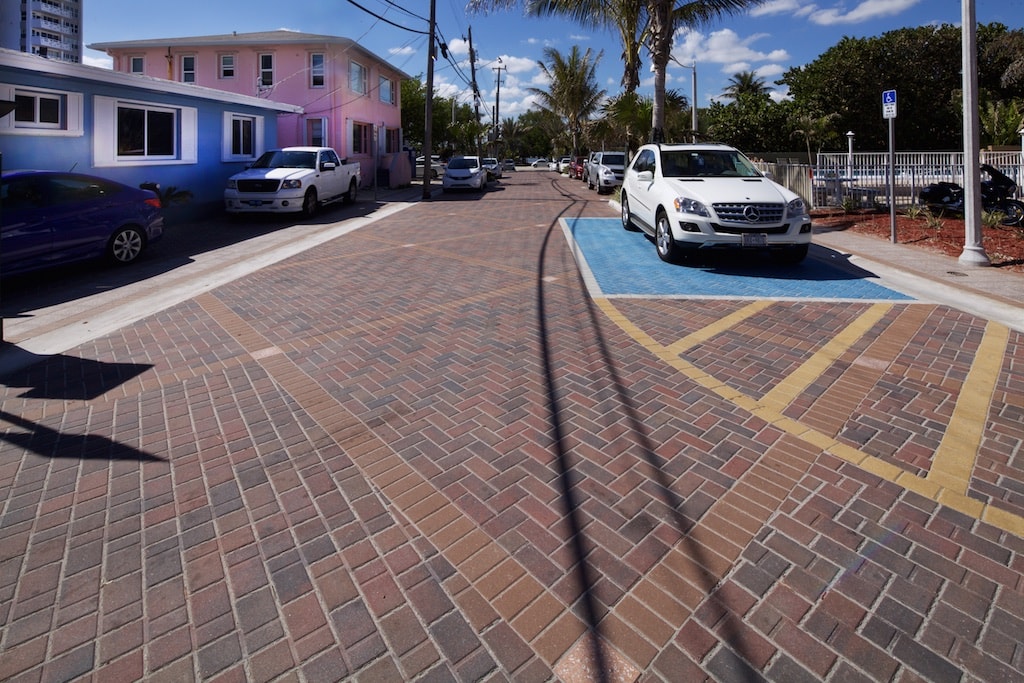
The single most important design question is what will drive over the pavers. Pedestrian-only areas such as pool decks, courtyards and walkways can use a wider range of products. Anything that carries vehicles — driveways, drop-off areas, parking, fire lanes or loading zones — needs pavers of the right thickness, a laying pattern that resists turning and braking forces, and a base engineered for the load. On many commercial jobs the project engineer or architect specifies these details; an experienced installer should be able to work from that specification and flag anything that won’t perform in the field.
Plan for Water
South Florida’s summer rain is the toughest test any hardscape faces. Slopes, drains and the transitions between pavers and other surfaces have to move water away from buildings and pool areas quickly. Poor drainage is one of the most common reasons commercial paver areas start to settle or shift, so it pays to review drainage during design rather than after the first storm season. In some situations, permeable paver systems are also worth discussing as a way to let water soak through the surface.
Keep the Property Open During Construction
Unlike a single-family home, a commercial property usually can’t simply close while the work is done. Residents still need to reach their units, tenants need their customers, and pools often need to reopen for the season. Ask your contractor how the work will be phased, how access and parking will be maintained, how the work zone will be separated from residents and the public, and how construction debris will be handled. A clear schedule shared with the board, management and residents before work begins prevents most of the complaints that can come up on association projects.
Order Extra Pavers and Plan for Maintenance
Paver colors vary slightly from one production run to the next, and minor variations in tone and texture are natural in all masonry products. Ordering a small stock of extra pavers from the same run — and storing them on the property — makes future repairs almost invisible.
From there, a simple maintenance plan protects the investment: periodic professional cleaning and sealing, keeping the joints filled with sand, prompt repairs to any settled or damaged areas, and a walk-through after major storms. Budgeting for this in the association’s reserves is far less expensive than a full replacement down the road.
Who We Work With
Hollywood Stone serves commercial home builders, multifamily owners and managers, condominium and homeowner associations, retail and shopping center managers, hotels and restaurants, hospitals, parking facilities, and municipal and government agencies across Miami-Dade, Broward, Palm Beach and Monroe Counties. Projects in our portfolio include the amenity areas at Lennar’s Bonterra community in Hialeah Gardens, the Marina Palms towers, Midtown 29, Clematis Street and the Hollywood streetscape. You can see more in our commercial projects gallery.
The Bottom Line
A successful commercial paver project is designed for the traffic it will really carry, drains well, is built without shutting the property down, and is backed by a simple maintenance plan. Plan those pieces up front, and pavers will keep a commercial property looking its best for many years.