What to Know Before You Choose Driveway Pavers in Fort Lauderdale
A driveway is usually the largest paved surface a homeowner will ever buy, and it works harder than any patio or pool deck. It carries the weight of cars and delivery trucks, it bakes in the South Florida sun, and it takes the full force of summer downpours. Choosing the right driveway pavers in Fort Lauderdale comes down to three decisions: the material, the laying pattern, and — the part most people never see — the base underneath.
Why Pavers Instead of Poured Concrete or Asphalt?
A properly installed paver driveway is rigid, yet flexible. The joints between the individual pavers let the surface move slightly as the ground shifts, so it doesn’t crack the way a poured slab can. If a section ever settles, or a utility line underneath needs to be reached, the pavers can be “unzipped,” the base corrected, and the same pavers re-laid — with no patch marks left behind.
Concrete pavers are also strong. By industry definition, a concrete paver has a minimum compressive strength of 8,000 psi — roughly three times stronger than ordinary poured concrete — and a maximum water absorption of 5%. That combination of strength and low absorption is a big reason pavers hold up so well in Florida’s heat and humidity.
Comparing Driveway Paver Materials
Concrete pavers are the most popular choice for South Florida driveways. They come in hundreds of shapes, sizes and colors from manufacturers such as Belgard, Tremron, U.S. Paverscape, Artistic Pavers and GEM Pavers. Most are made with an extra dose of cement and pigment concentrated in the wear layer, which helps the color hold up to traffic. They offer the widest range of styles at a range of price points.
Clay brick pavers are kiln-fired from natural clay, so their color is permanent and won’t fade the way surface pigments can. They give a driveway a classic, traditional look that suits Mediterranean and older South Florida homes particularly well.
Travertine and natural stone bring a high-end, resort feel and stay comparatively cool underfoot. For a driveway, thickness matters: stone intended for vehicle traffic should be thicker than the material used on a pool deck or patio, and it is often sealed to resist staining from oil and tire marks.
Porcelain pavers are dense, stain-resistant and available in modern stone, wood and concrete looks. Thicker outdoor porcelain products can be used in some driveway applications, but product choice and installation method are critical — this is a material where you want an installer who works with it regularly.
Pattern Matters More Than Most People Think
The laying pattern isn’t just about looks. Cars turning and braking push pavers sideways, and some patterns resist that movement better than others. Herringbone patterns — especially a 45-degree herringbone — are widely recommended for driveways because each paver locks against its neighbors in two directions. Running-bond and basket-weave patterns can look beautiful too, but they are better suited to areas with lighter or straight-line traffic.
A contrasting soldier-course border is another detail worth considering. Beyond framing the driveway visually, the border helps the edge restraint hold the field pavers in place.
The Base Is What Keeps a Driveway Level
Interlocking pavers work as a system: a compacted aggregate base, a bedding sand layer, an edge restraint around the perimeter, and joint sand swept between the pavers. When all four are done right, the pavers lock together and act as one flexible pavement. When any of them is skimped on, the result is the sinking, rutting and loose pavers you see on driveways a few years after a rushed installation.
This matters even more in South Florida, where sandy soil, a high water table and heavy summer rain all work against a weak base. Before you compare prices, ask every contractor how deep their base will be, how it will be compacted, and what they use for edge restraint. Two quotes that look far apart are often explained by what’s going underneath.
Keeping Your Paver Driveway Looking New
Paver driveways are close to maintenance-free compared with asphalt, but a little care goes a long way. Rinse off oil and rust spots before they set, keep the joints topped up with sand, and consider a professional cleaning and sealing every few years. A good sealer helps lock in joint sand, resists stains, and protects the color from UV fading. If a few pavers ever crack or sink, they can be lifted and replaced individually — another advantage over poured concrete. Our paver repair team handles exactly that kind of work.
See It in Person
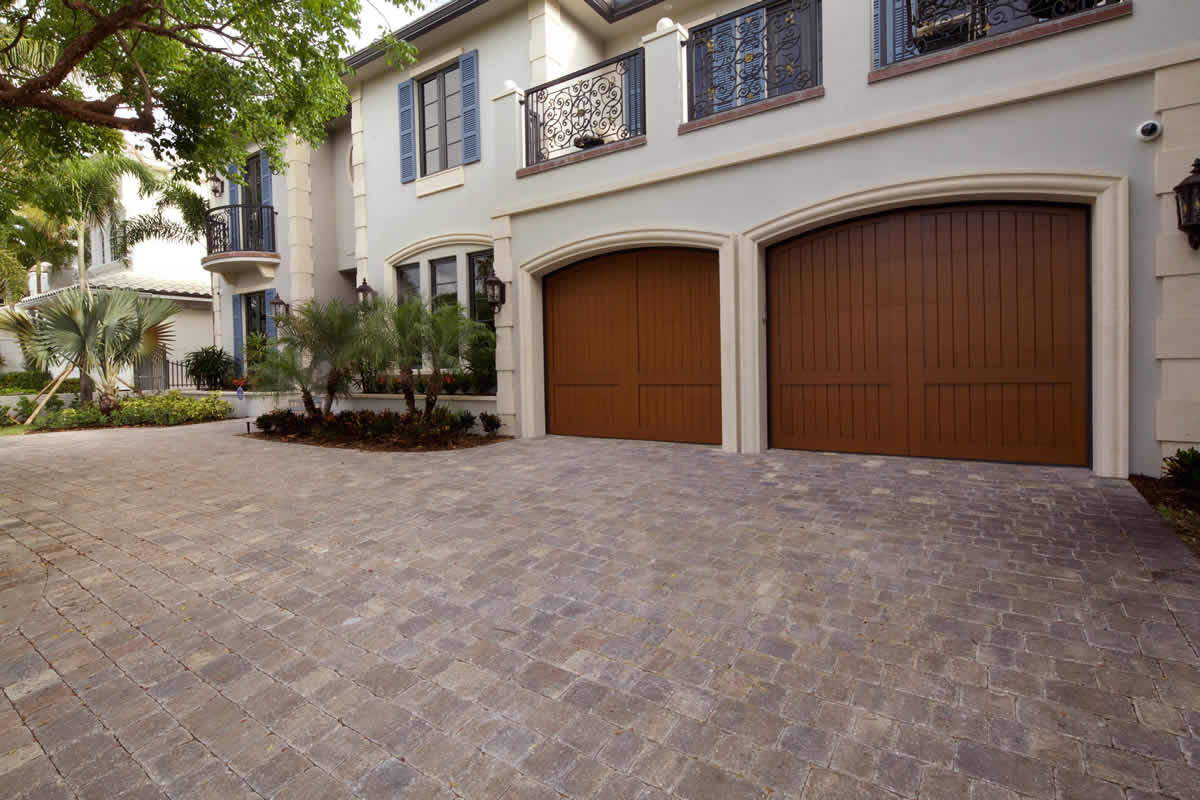
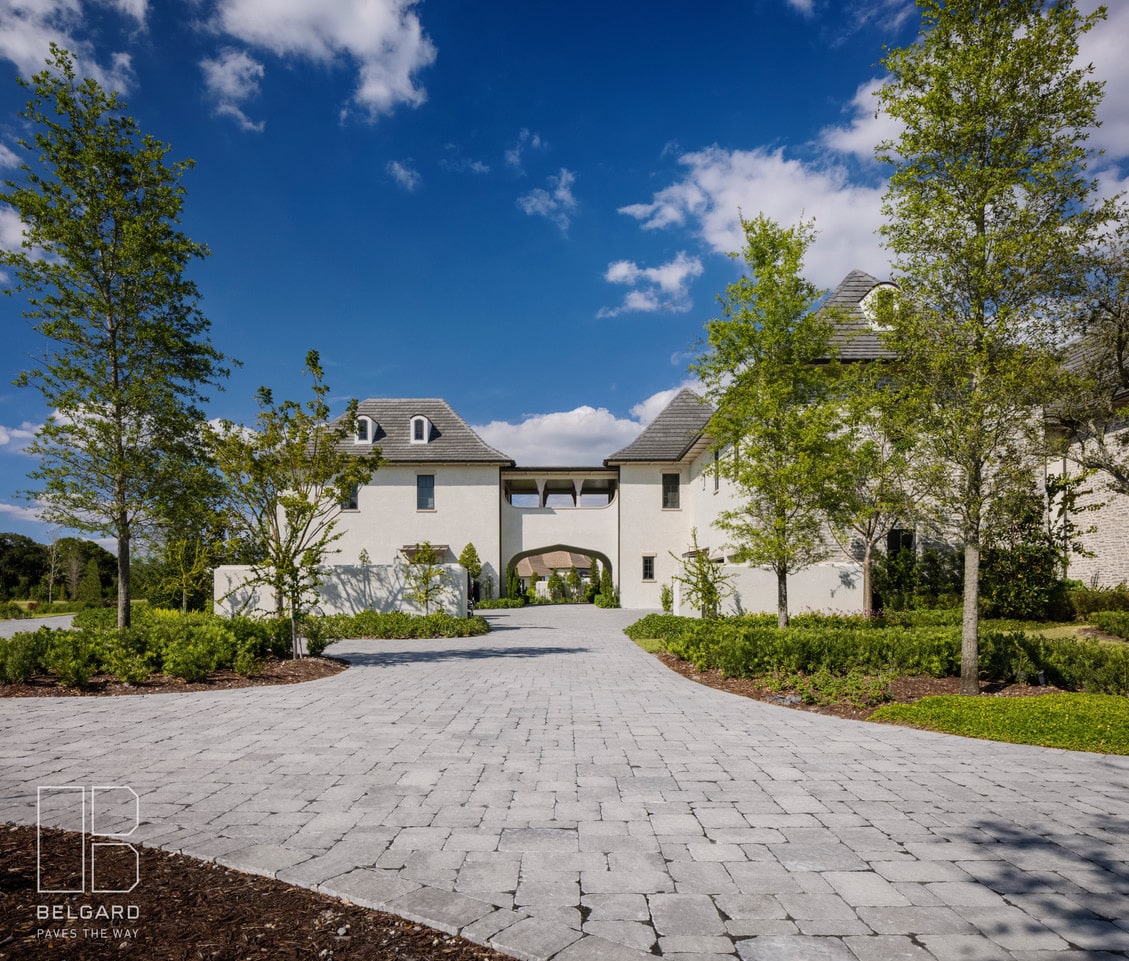
If you’re still deciding, take a look at a few finished driveways. The Lewin Lane project, installed with Belgard pavers, won a 2021 National Hardscape North America award in the residential category for projects over 3,000 square feet. The Robin Road residence pictured at the top of this article shows how a circular drive and motor court can tie a home’s entry together. You’ll find many more in our residential projects gallery.
The Bottom Line
The best driveway pavers for your Fort Lauderdale home are the ones that suit its architecture, stand up to the way you actually use the driveway, and are installed on a properly built base. Get the material, pattern and base right, and a paver driveway can look great for decades — and can be repaired invisibly if anything ever goes wrong.